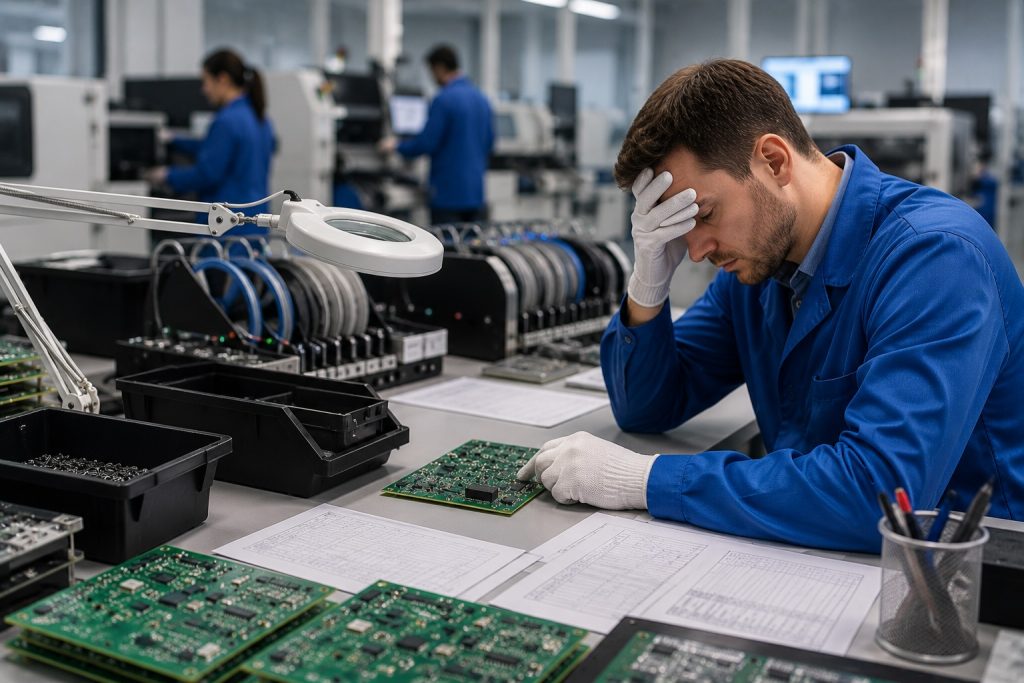

Production delays, inspection failures, and unexpected engineering revisions often begin long before assembly starts. Many businesses sourcing surface mount assemblies focus heavily on pricing and lead times while overlooking inspection controls, traceability, and manufacturing alignment.
These gaps can affect reliability, compliance, and product performance across aerospace, automotive, medical, and industrial applications. A more structured sourcing approach helps reduce risk and supports stable assembly outcomes.
1. Overlooking Inspection Processes During Surface Mount Assemblies
Inspection plays a major role in assembly quality. Automated optical inspection helps identify polarity issues, solder defects, and placement errors before boards move into testing or integration.
This becomes especially important for dense layouts and assemblies using fine-pitch components. Without proper inspection planning, defects may remain hidden until later production stages, where rework becomes more expensive.
Strong sourcing reviews of surface mount assemblies should confirm:
- Inspection methods match board complexity
- Defect reporting procedures are documented
- Corrective actions are part of the process
- Testing expectations are defined early
For industries such as aerospace and medical devices, inspection records also support compliance and traceability requirements.
2. Misjudging Technical Capabilities for Surface Mount PCB Assembly
Surface-mount PCB assembly requires more than basic placement equipment. Complex projects often involve mixed technologies, fine-pitch components, thermal management requirements, and strict tolerances.
Capability limitations typically appear during setup or production scaling. These issues can delay schedules and increase troubleshooting costs.
Important evaluation areas include:
- Placement accuracy
- SMT process controls
- Through-hole integration capability
- Engineering support during setup
- Experience with reliability-sensitive applications
This becomes more important for automotive electronics and industrial automation systems, where reliability directly affects operational performance.
3. Ignoring Traceability in Surface Mount Technology Assembly
Traceability connects approved components, assembly records, inspection results, and revision history into one documented process. Without this visibility, identifying material or process issues becomes difficult.
Strong traceability practices help reduce risks linked to:
- Unauthorized substitutions
- Counterfeit components
- Documentation gaps
- Recall management challenges
This level of control matters for long lifecycle programs and regulated industries. Aerospace and defense programs, for example, often require detailed build documentation throughout the manufacturing process.
Useful sourcing questions include:
- How are part substitutions approved?
- Are build records retained for every assembly?
- How are revision changes reviewed?
- What quarantine procedures exist for failed materials?
4. Prioritizing the Lowest Quote Instead of Long-Term Value
Low pricing often hides missing process steps. Quotes that exclude inspection, engineering review, documentation, or testing may create additional costs later.
This issue commonly affects programs with changing specifications or compressed timelines. Rework, schedule delays, and unclear ownership can quickly offset early savings.
A stronger sourcing review should evaluate:
- Inspection scope
- Documentation support
- Engineering involvement
- Change management processes
- Communication structure
Stable assembly programs depend on predictable execution, not just lower upfront pricing.
5. Neglecting Engineering Support During Sourcing
Engineering involvement helps identify manufacturing risks before production begins. This includes reviewing layout concerns, component selection, thermal considerations, and assembly compatibility.
Certain projects often require early coordination between engineering and manufacturing teams, and it can involve:
- Custom cable assembly
- Cable and wire harness integration
- Military assemblies
- Medical cable assembly
- Electro-mechanical assembly
This collaborative approach helps reduce redesign cycles and improve production readiness. It also supports smoother integration into larger systems such as control panels and box-build assemblies.
Star Engineering Inc. supports circuit board customization for critical markets, where manufacturing alignment and documentation control remain critical throughout the assembly process.
Reducing Risk Through Better Surface Mount Assembly Sourcing
Sourcing decisions directly affect assembly quality, production stability, and long-term reliability. Inspection planning, manufacturing capability, traceability, engineering support, and process visibility all influence the success of surface mount assemblies.
A structured sourcing strategy helps businesses reduce avoidable costs while improving consistency across complex electronic manufacturing programs.
Contact Star Engineering Inc. to learn more about surface mount technology assembly and circuit board customization solutions.